Florida’s prison population has decreased 8.3% since FY 2018-2019.
Florida has the third largest prison population in the US with over 87,000 in state prison. Thousands more are incarcerated in Florida jails.
Florida’s incarceration rate of 662 inmates per 100,000 adult residents is substantially higher than the national average of 537.
Inmates serve 5 years in state prison on average.
Racial and ethnic minorities are overrepresented in the prison population: African American males make up nearly half of the prison population.
Over 58% of Florida state prisoners are serving time for violent offenses; 14% of state inmates are imprisoned for the sale, manufacture, purchase, trafficking or possession of drugs. These figures are consistent with the national average.
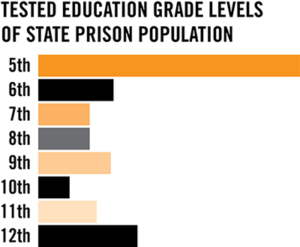
The majority of inmates are under-educated: 72% of state prisoners test at or below GED (9th grade) level.
Inmates with mental health problems are a significant part of the state’s prison population with almost 17% receiving ongoing mental health care.
It costs $24,265 per year on average to house a Florida state prisoner.
National Figures
Over 1.4 million inmates are held in state or federal prison and local jails (2019).
Approximately 1 in every 40 US adult residents is under some form of correctional control (in prison or jail or on probation or parole).
In 2019, the number of persons supervised
by U.S. adult correctional systems decreased (down 65,200 persons) for the twelfth consecutive year.
93% of state and federal prisoners are male.
The incarceration rate for White males is 214 per 100,000 White residents.
The incarceration rate for Hispanic males is 525 per 100,000 Hispanic residents.
The incarceration rate for Black males is 1,096 per 100,000 Black residents.
Programs Make a Difference
Education programs decrease recidivism.
Substance abuse programs decrease recidivism.
Individuals who participated in prison-based treatment followed by a community-based program postincarceration were 7 times more likely to be drug free and 3 times less likely to be arrested for criminal behavior than those not receiving treatment.
Inmates who earn a GED are 8.7% less likely to recidivate than those who do not complete a program.
Inmates with a Vocational Certificate at release were 14 percent less likely to recidivate than inmates overall.
Links to Other Organizations
National
US Department of Justice Bureau of Justice Statistics: www.bjs.gov
Kang-Brown, Jacob et al. People in Jail and Prison in Spring 2021. Available online at https://www.vera.org/downloads/publications/people-in-jail-and-prison-in-spring-2021.pdf
From National Center for Biotechnology Information:


 Our goal is to reduce the impact of repeat offenders upon public safety, public spending, Florida families and individual lives.