
He almost chose prison over the streets of Florida. A bed in a shared house gave him the second chance he desperately needed.
By Caden Dyer · Aug. 13, 2026
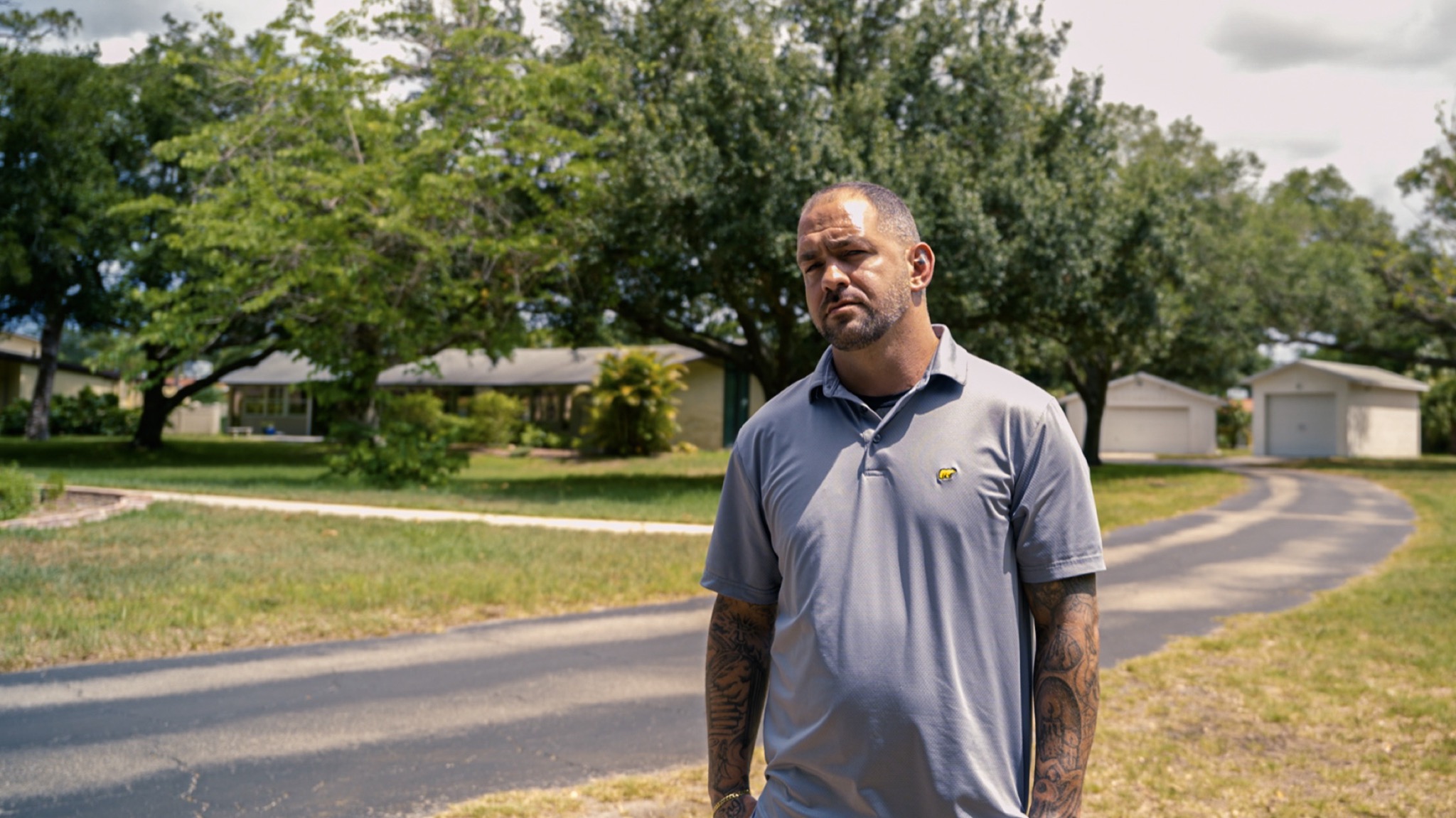
Scottie Harville stands in the backyard of his Project 180 transitional home in Sarasota, Florida. He left prison with nothing but a backpack and $50. Photo: Jackson Ingvoldstad/News21
This story includes descriptions of drug use and addiction.
SARASOTA, Fla. — Maybe prison would be better.
Scottie Harville mulled his options over one more time. In just a couple months, he’d be released early from prison, and two years of court-ordered probation would begin.
The release officer marked him down as “homeless” in the paperwork. Was it true?
Scottie had planned to move back to his parents’ house in Huntsville, Alabama, but his parole board mandated he stay in Florida. He’d thought about his ex-girlfriend, the one he used to do drugs with. She’d disappeared after his arrest.
Stuck in Florida, a state where he didn’t have family or friends, Scottie watched as the time to find housing — and his options — slowly dwindled.
What about his 3-year-old son, now far away in Pennsylvania? Scottie’s dream of being reunited with his little boy slipped farther out of reach.
“I had nowhere to go once I got out. Didn’t know what I was going to do,” Scottie said, a thick Southern accent coming through on every word.
The release forms stared back at him. Homeless.
Prison — with the horrible food, stabbings and petty theft among inmates — had at least given him a roof over his head and kept him away from drugs. Scottie considered asking to serve the remainder of his sentence rather than be homeless on Florida’s streets.
But he reached out to the release officer about his options. She gave him an application for a reentry nonprofit called Project 180 that would keep him in Florida, farther south on the Gulf Coast in Sarasota, where he could meet parole requirements. He filled it out, and before two weeks went by, he heard back.
The man on the phone named Seth Campbell wanted to know more about him and how he’d spent his time in prison. Was he truly ready to change his life?
Becoming Scottie
For as long as he could remember, Scottie’s biological father had been in prison. He grew up splitting time between family houses, learning that he could get away with a lot more at his grandparents’ home.
Never very popular, he had a few friends he’d party with, but most of the time he just wanted to go fishing or hunting. He learned plumbing with his stepdad: how to install pipes, insulate them and run new sewer lines.
He struggled with anger issues, and at 24 he started snorting meth with his stepbrother. Eventually, they began smoking it instead.
The years tumbled by. At one point, he went through $300 worth of meth every day.
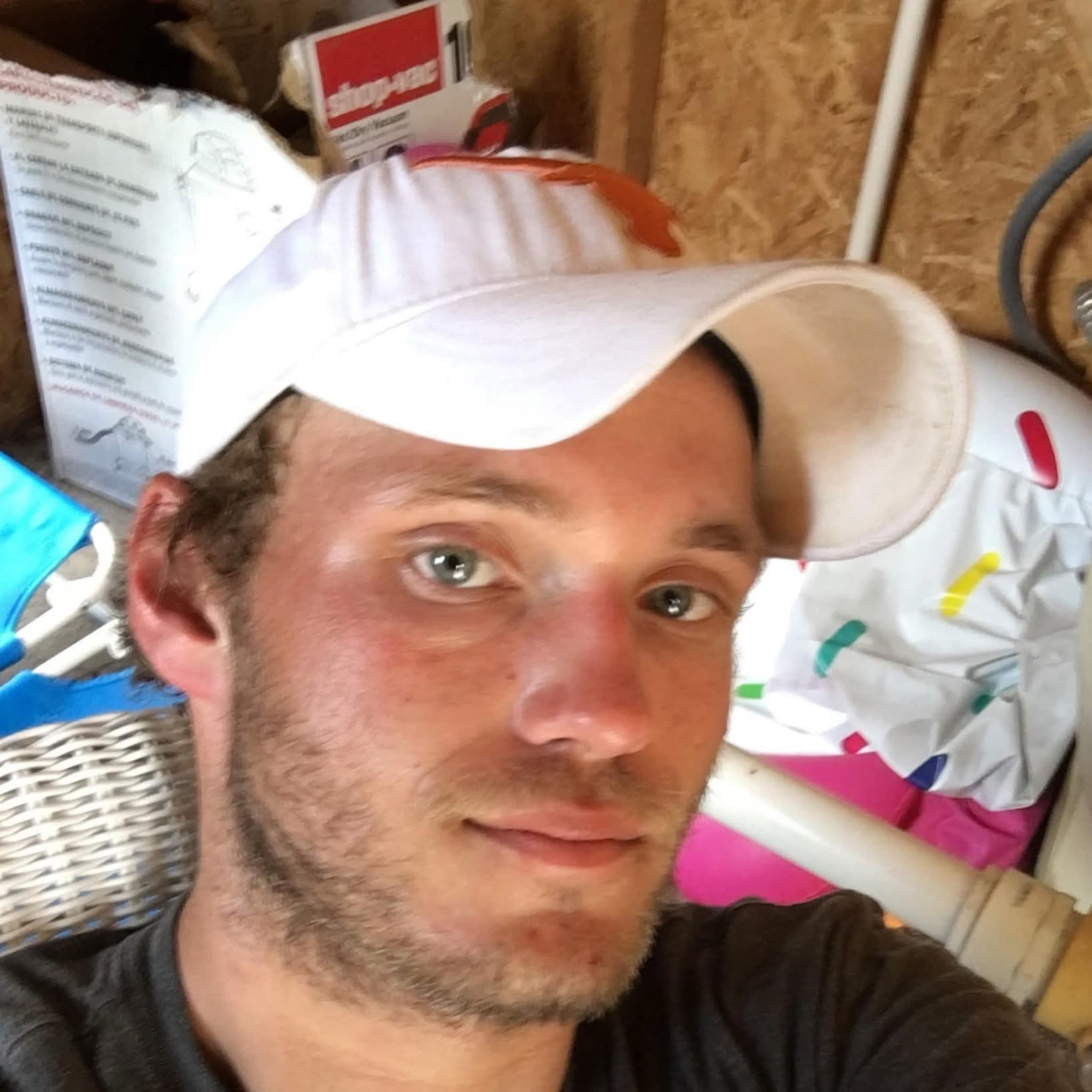
Scottie Harville during the period when he was using methamphetamine. He began using the drug at 24. Photo courtesy: Scottie Harville
He flew to Florida to be with a single mother he’d met online. She began using with him, and his anger issues only intensified. The Department of Children and Families removed the kids, including the little boy they’d had together.
“I went to prison for domestic violence, battery by strangulation and false imprisonment and tampering with a witness. Basically taking her phone away from her, that way she can’t call law enforcement,” Scottie said. “We were beyond stressed and confused and upset, and emotions tend to get to people and make you do things that you’ll end up regretting.”
In prison, he had the time to reevaluate life. Throughout his two-year sentence, Scottie attended anger management seminars that he said “surprisingly helped,” worked as a houseman cleaning up around the prison and earned his GED.
Almost two years later, he boarded a Greyhound bus headed for Project 180. Scottie was in for a long ride — normally six hours by car, but the bus took around 17 hours to finally bring him to Sarasota. It was also his first brush with drugs outside of prison.
“All I had in my name was $50, a backpack with a small travel pack of hygiene and the clothes I had on,” Scottie said, remembering the bus ride. “I had about three random people just walk up to me and ask me if I needed anything — drugs, whatever. I just had to turn around and walk away. I knew I had money in my pocket, but I didn’t want to live that life no more.”
He hadn’t been nervous to start over until the bus pulled into Sarasota. He suddenly felt sick to his stomach.
Another formerly incarcerated man was waiting at the bus stop. Short and stocky, with metal teeth that glinted when he flashed a rare smile, Seth had battled addiction and visited rock bottom many times, just like Scottie. But he’d graduated Project 180 three years before and stuck around as an employee. Now, he stood ready to usher Scottie into a better life, too.
Seth walked right up and introduced himself to Scottie. The welcome was immediate. From there, everything moved quickly.
Seth Campbell stands in the grassy lot next to Project 180’s office. A graduate and now employee of the nonprofit, he vets potential residents while they’re still incarcerated, then helps them transition into their new houses. Photo: Jackson Ingvoldstad/News21
On parole, Scottie needed to adhere to strict curfew restrictions and follow a very specific set of rules, like checking in with his probation officer regularly. And he needed a job to pay the fees Project 180 would soon begin charging — but it would be difficult to find one with a felony conviction on his record and no phone number or driver’s license. His race against time to find work had begun.
At least he wouldn’t have to worry about finding a stable mailing address to put on job applications. Scottie thought back to the “homeless” mark on his papers. Parole would have been much harder to follow on the streets. How would he have gotten to mandatory meetings with his probation officer? Applied to jobs? Met his curfew? Scottie couldn’t see the sense in it.
Project 180 graduate and former employee Tom Graff said, in his experience, housing beats out all other potential success factors when someone leaves incarceration.
“Housing is the most important thing for someone to get their dignity back and to maintain a stable life. Without that, there’s really nothing else,” Tom said.
At Project 180, residents can stay up to two years, allowing them to build new habits and gain a housing track record to show future landlords. Rebuilding a life takes time.
Coming home
Cold waves of air conditioning rush out of the house when Scottie opened the front door.
Three weeks after Seth picked him up from the bus stop, he’s adjusting to his new home. Project 180 gave him a bed in the first single-family house the nonprofit purchased. Over the years, it’s served as a home for men in all stages of recovery.

Scottie and Seth assemble Johnny Doherty’s bed in his new room. Founded in 2008, Project 180 owns three men’s transitional homes. They plan to open a fourth for women. Photo: Jackson Ingvoldstad/News21
Inside, it’s immaculately clean, doing little to betray the fact that five men live there. Squishy beige couches fill the living room. Soon, they’ll be full of residents from other Project 180 houses stopping by just to visit.
Big windows spill natural light into Scottie’s shared bedroom. The shelf above his bed is mostly empty, except for three ball caps.
“It killed me not having a hat in prison,” Scottie said, adjusting the Project 180 cap on his head.
The garage is stacked with bicycles, a common form of transportation for people leaving incarceration who are working to obtain driver’s licenses. Outside, a screened-in porch with workout equipment and faded patio furniture overlooks a little backyard and grill. The rooms are decorated with care. This isn’t just a house — it feels like a home.
But the fact that the houses are full of other guys going through the same things is the true game changer, according to multiple residents.
“This is like my family away from my family,” Scottie said.
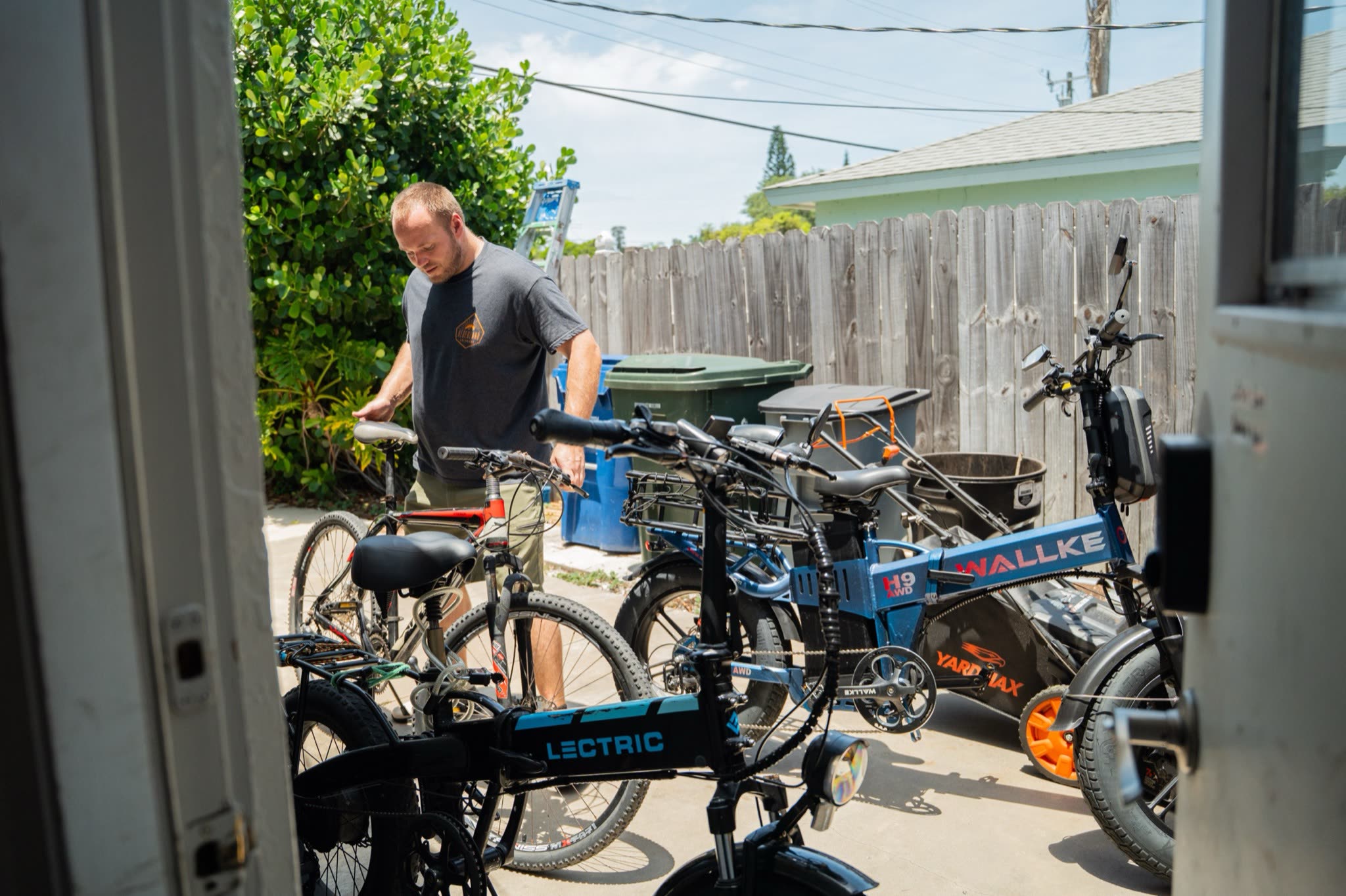
Scottie moves bicycles out of the garage before cleaning it out. Many residents rely on bikes after they leave prison. Photo: Jackson Ingvoldstad/News21
Life after prison isn’t easy. Successful recovery involves staying sober and employed. There’s also an adjustment back into society after years of incarceration’s strict routines and lack of independence. Tom said he misses the supportive camaraderie in the Project 180 houses.
“There’s some really horrible days going through a lot of these challenges we go through,” Tom said. “I lost my self-identity, and by being in there, I’ve got brothers that I know I can count on. And it’s not just for good times, it’s bad times.”
Project 180 CEO Antonia Rolle called the culture a brotherhood.
“There’s a saying in Project 180: ‘It’s always safest in the middle of the pack.’ And they kind of surround themselves with their brothers,” she said.
Day in, day out
One of Scottie’s favorite parts of being out of prison — the food. Every other Saturday, Project 180 staff take a few of the guys on a Costco run. Everyone learns how to plan meals for the week and cook for themselves.
With all five men in Scottie’s house working different shifts, eating together is a rare treat, but they make time for each other.
Like when graduate Ronnie Solorzano, a 66-year-old military veteran, came over on his day off. Ronnie suggested a handful of restaurants: pizza, burgers, Amish buffet. When he mentioned a bar, Scottie shook his head. He needs to stay away from alcohol.
They landed on the buffet, an Amish restaurant called Der Dutchman. Scottie cleared his plate down to a pile of chicken bones and hopped up to get more, enjoying the freedom to choose his own food. He said he didn’t have that autonomy in prison, where the food often consisted of beans and suspicious meat the men called “rat patties.”

Roommates Robert Six and Scottie share a buffet-style lunch with resident Johnny and graduate Ronnie Solorzano at an Amish restaurant in Sarasota. They don’t talk much at the table, content to enjoy a good meal in each other’s company. Photo: Jackson Ingvoldstad/News21
Readjusting to life without prison’s rigid structure is a challenge. In the first few weeks out, still without a job, Scottie struggled to feel purposeful as his roommates stayed busy.
At job fairs, employers balked when they learned he didn’t have a driver’s license. He’d need his birth certificate to get one. Seth had helped him order a copy, but in the meantime, there wasn’t much to do other than focus on keeping his sobriety.
One of Project 180’s only requirements is that residents attend 90 meetings in their first 90 days of the program. For Scottie, it’s Narcotics Anonymous meetings, which are associated with decreased drug use and increased rates of abstinence, according to a 2020 review of NA-specific studies published by Alcoholism & Drug Abuse Weekly.
His days took on a monotonous tone. He often found himself sitting on the couch watching TV, waiting for everyone to come home — torturous inactivity for a guy who enjoys keeping busy and working with his hands.
But at least he wasn’t homeless. Older residents and graduates told him to be patient, and the next steps would come.
They did. During his third week at Project 180, his phone rang while he was watching TV. A roommate’s boss wanted to hire Scottie to work construction, and he could start the very next day, at $16 an hour.
Progress.
Opening up
Scottie has been doing his best to avoid the parts of his old life that sent him to prison: alcohol, drugs, ex-girlfriends. But they’re not easy to forget. At meetings, he’s watched older guys in recovery talk about their own journeys. He can see himself in their stories, but that level of vulnerability scares him.
“It’s hard to me sometimes to speak about things like that because I feel like sometimes people are judgmental,” Scottie said.
He’s slowly improving. In the week before he landed the construction job, Scottie started opening up to his roommates as they drove across town one night.
He admitted he’d been struggling with alcohol, and that gas station coolers full of beer seemed to shine when he walked inside. They encouraged him to talk about that struggle in his next meeting.
“They’re very open and welcome, and I’m starting to see now that they’re not judgmental at all,” Scottie said. “They’ve all been there.”
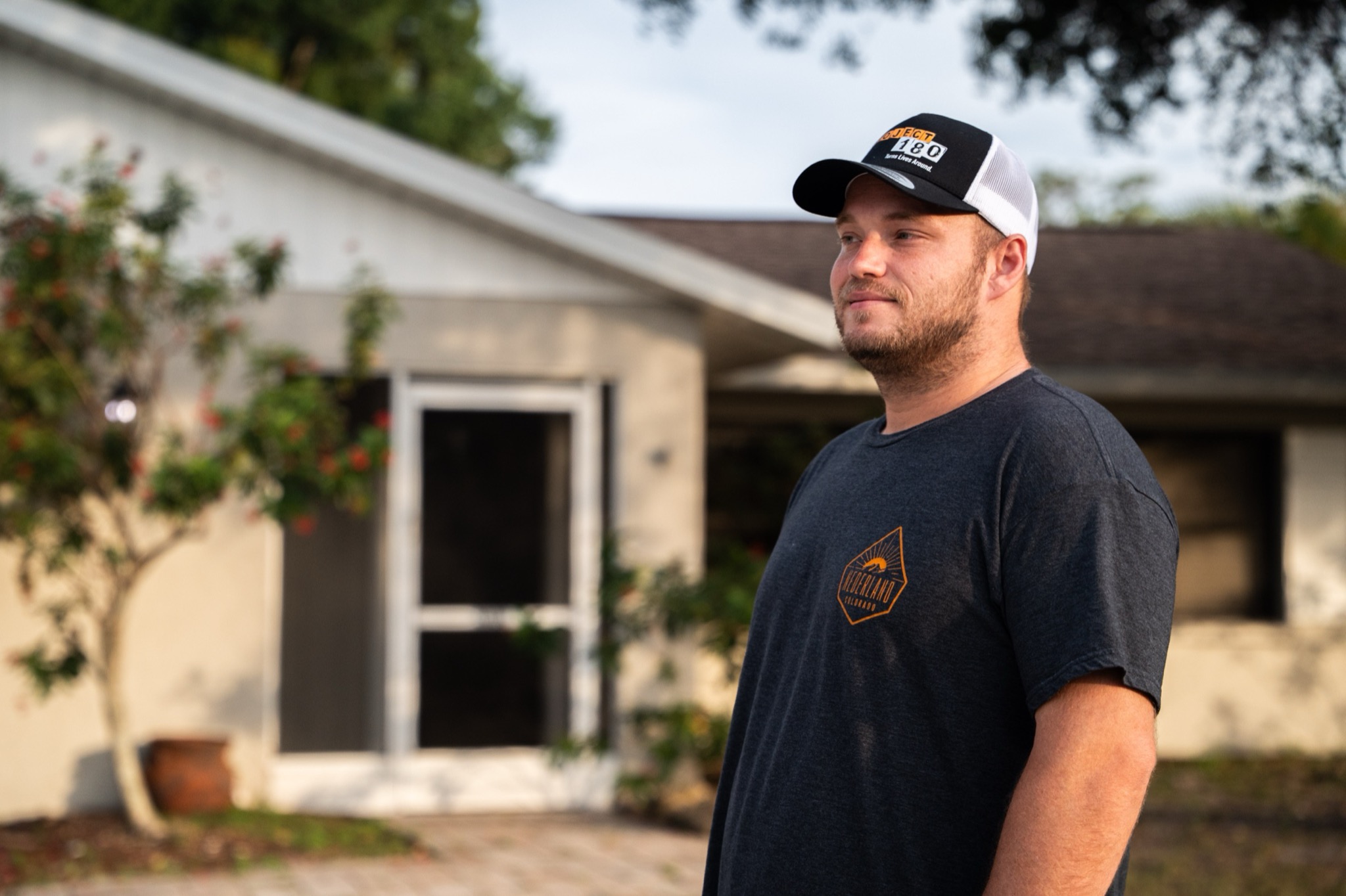
Scottie takes in the view of his front lawn. Photo: Jackson Ingvoldstad/News21
Scottie had to pass a strict vetting process to even land in the program. Project 180’s beds are limited, so Seth determines which guys will be a good fit.
“We offer a lot, so not everybody wants to get in here for the right reason,” Seth said.
Project 180 does its best to prepare residents for life in society again, starting with buying them a phone, a case and a month of service. After that, it’s up to residents to cover the cost.
“I have to make sure that they’re truly wanting to change their lives, to come in that way, ‘cause one bad apple can spoil the whole bunch,” Seth said.
Seth looks for follow-through and a drive to improve while still in prison, because those are the expectations during a Project 180 stay. He thought Scottie’s attitude showed potential.
“He continues to just do what’s suggested by the people who have done it before him,” Seth said. “And that seems to be a pattern of success. So as of right now, Scottie is doing exactly what he should be to end up successfully completing the program and ultimately living a successful life.”
Taking it slow
Be the turtle.
That’s advice graduate Tom gives to guys just starting their reentry journey. The rabbit never wins in the story, he said, and reentry is no different.
Scottie nods along when he hears mantras like this from graduates and older residents. It’s hard to be patient while he’s also anxious to garner approval from those who have gone before. When his boss gives him a $2 raise on the second day of work, Scottie rushes to tell his house leader the moment he walks through the door. He’s happy to work overtime and weekends — anything to stay busy.
His right foot taps restlessly when he starts talking about the future. Never much of a planner, he likes to live life one day at a time “because tomorrow’s not promised.”
“Right now I’m just taking everything together and trying to get all my ducks in a row,” Scottie said.
He wants to get a promotion at work if possible. In five years, he’d like to be able to rent an apartment or buy a little house. Seth promised to help him build his credit again.
Among his goals are reuniting with his son and eventually building a relationship with him.
“I know one day he’s gonna look back and he’s gonna ask me what happened. And I’m gonna have to explain it to him,” Scottie said. “And I don’t want to lie to him about it, but I know it’s going to be hard to admit the stuff that I did.”
‘I’d be back on the streets’
Scottie’s living room is filling up fast.
It’s Monday night, almost time for the big weekly meeting that’s mandatory for Project 180 staff and residents. The front door stays in motion as guys spill in, some helping themselves to a cup of coffee, others heading for the porch to grab a smoke before 6 p.m.
They’re excited to see each other. Wearing baseball caps and big sunglasses, many make their way around the room to slap backs and give hugs. They drag in dining room chairs for more seating.
“That’s that motor oil, baby!” someone jokes, pointing at a cup of pitch-black coffee that belongs to Michael, the youngest resident. He grins and settles back into the couch. Across the room, Scottie chuckles in appreciation.
At 6:01 p.m., Seth calls everyone to attention with a loud “Gentlemen!” The room hushes, and guys pull out their phones to silence them.
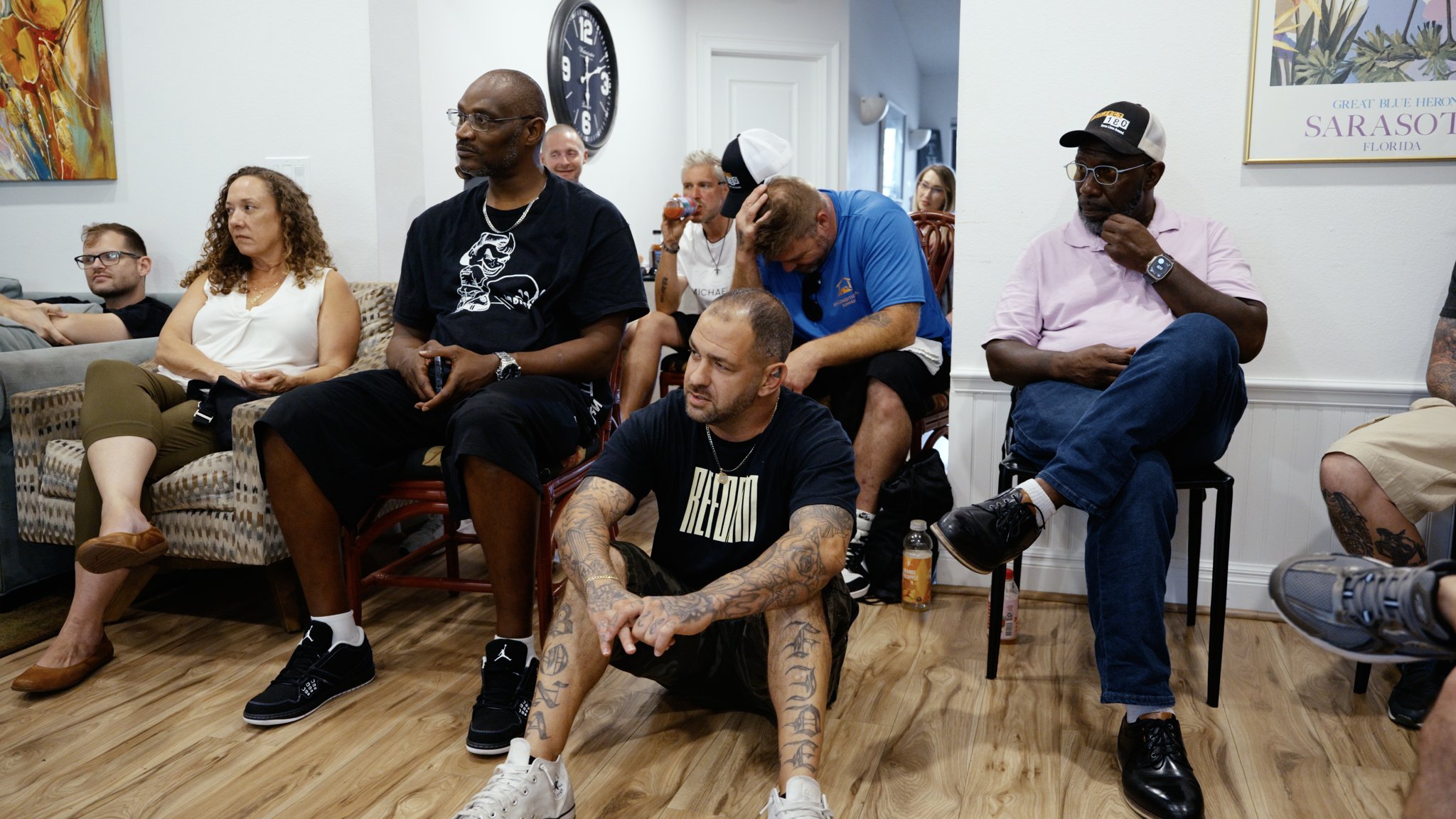
Seth and David “Yogi” Harris look on as residents share what brought them to Project 180 in the mandatory Monday meeting. Photo: Jackson Ingvoldstad/News21
They start with the Serenity Prayer, then move into housekeeping and celebrations: Two residents secured their own places and will be moving out, while three more have caught up on their fees. Scottie’s roommate has been clean for a year. Their joy is infectious as the room erupts in hollers and clapping.
“Give me like two minutes, each person: your name and what brought you here,” Seth says. “And let’s start with Scottie.”
All eyes turn to Scottie, who shifts a little in his seat. Fidgeting with his cap, he launches into his story with blunt honesty — the girls, the drugs, the kids. And the homeless mark on his papers.
“If it wasn’t for this program, honestly, I’d be back on the streets right now,” Scottie says. “Or I’d already be back in jail or prison.”
 Our goal is to reduce the impact of repeat offenders upon public safety, public spending, Florida families and individual lives.