A criminal record can scare away potential landlords. In Florida, reentry program Project 180 gives people released from incarceration somewhere to land.
By Caden Dyer · Aug. 13, 2026
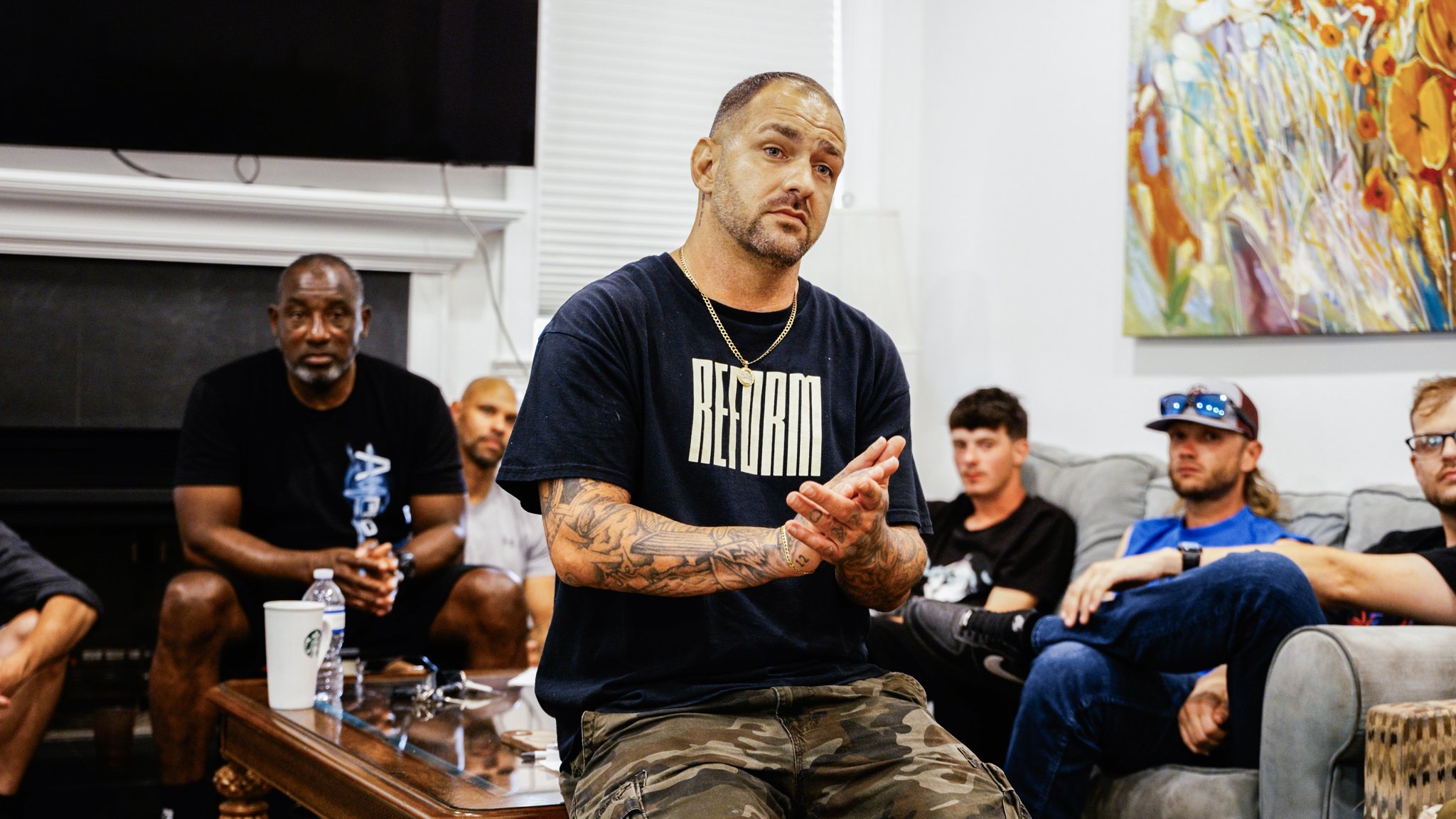 Seth Campbell encourages Project 180 residents in a weekly meeting. As director of residential and reentry services for the nonprofit, he works with the guys daily, helping them get back on their feet after incarceration. Photo: Jackson Ingvoldstad/News21
This story includes descriptions of substance use and addiction.
SARASOTA, Fla. — Brian Richards doesn’t drink.
Not anymore. Now, the 52-year-old twists the cap of his green Maison Perrier sparkling water back and forth as he recounts a cycle of drugs and alcohol that began hauntingly young.
He started drinking around age 12.
“I had dropped out of school at an early age. You know, I want to say eighth grade was the last grade I actually completed,” Richards said. “I already had a criminal record at that point.”
By 15, his parents had enrolled him in a 12-step recovery program. By 18, he had a child.
He bounced from state to state for years, fleeing arrest warrants, talking his way out of jail stints and doing time in a maximum-security prison. Although he tried multiple recovery programs, he never completed one.
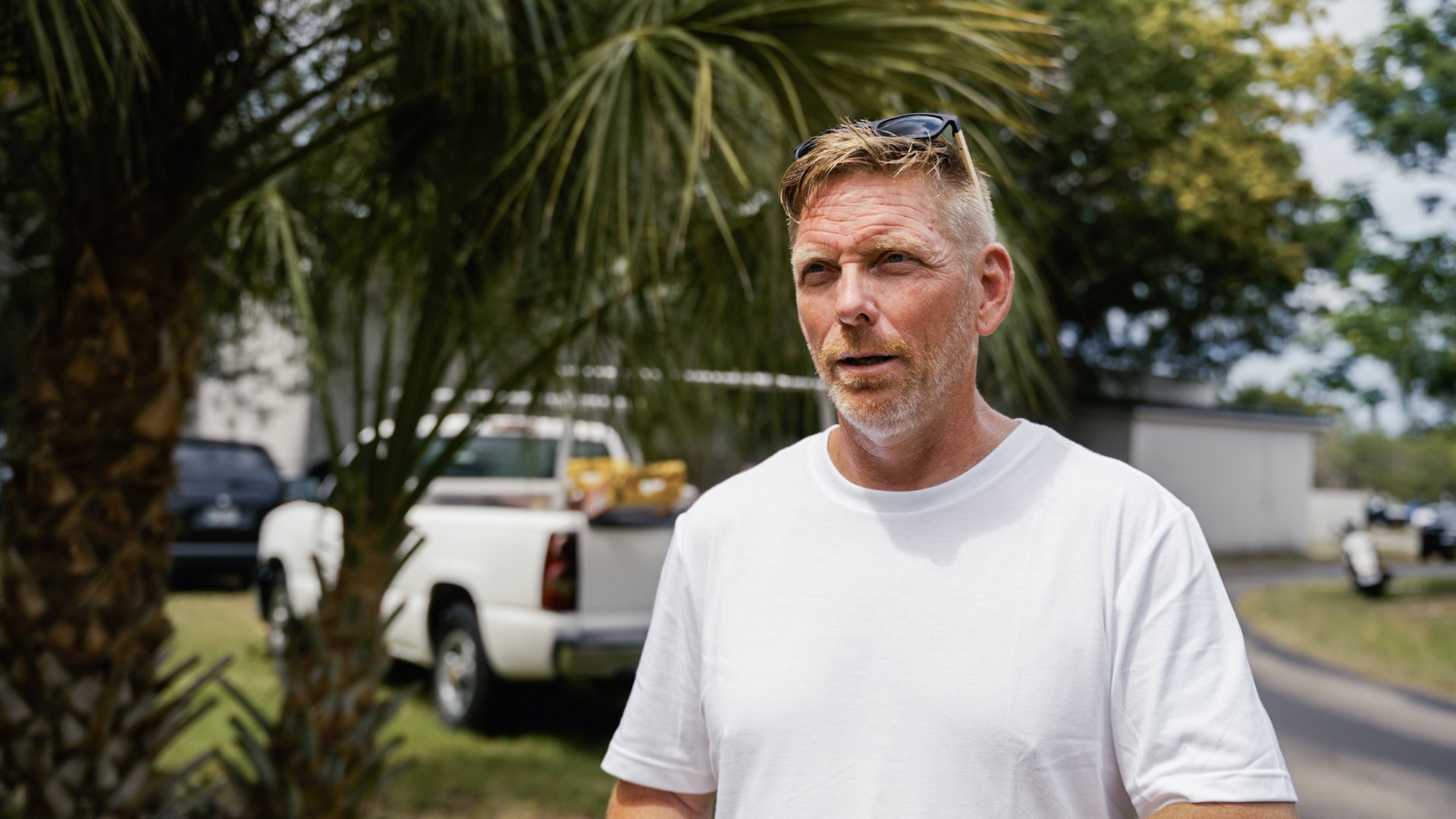
Brian Richards stands in the lot of the Project 180 office in Sarasota, Florida. Photo: Jackson Ingvoldstad/News21
Hoping to start fresh, Richards eventually landed in Florida. But hope alone couldn’t change what he said was now a criminal lifestyle and mindset, and a Sarasota County judge sentenced him to a year of incarceration for burglary and possession of a controlled substance in 2021. His sentence also came with 10 years of probation. One step out of line in those 10 years, and he’d be back in jail.
Richards had hit his breaking point, and this time, he felt ready to give recovery a solid try. As his year in jail came to a close, he realized he was missing something basic: a place to call home.
He knew a safe, stable environment was essential if he wanted to successfully recover from addiction.
The days passed, drawing him closer to the end of his sentence — but also to homelessness.
Housing and crime overlap
Richards’ story isn’t rare.
American jails admitted 7.6 million people from July 2022 to June 2023. In 2023 alone, 472,300 people went to prison in the U.S., and 453,242 individuals were released, according to the Bureau of Justice Statistics.
People recently released from prison or jail face an uphill climb. Sometimes they leave jail with nothing more than a mesh bag containing soap, deodorant and a few dollars. Among the most basic things they’ll need to begin reintegration into society are a cellphone (which costs money) and a new driver’s license (which requires time and official documents). Then there’s housing. Many don’t have much more than a place to crash for a few days, and one formerly incarcerated person called it the “biggest hurdle” they experienced post-release.
Without a mailing address and a valid ID, they’ll struggle to find the stable employment necessary to appease parole officers. According to data collected by the U.S. Department of Justice, 66% will be rearrested within three years, and about 61% will wind up back behind bars within 10 years.
The percentage of people who return to jail or prison is referred to as the recidivism rate. States define recidivism in different ways — sometimes by rearrest, sometimes by whether a person is reincarcerated. But recidivism doesn’t always mean someone committed a new crime. Technical violations like missing a probation appointment or failing to meet curfew can land someone back in custody.
But can housing play a role in whether someone winds up reincarcerated?
Housing insecurity is associated with an increased risk of recidivism, according to research published in the journal of Criminal Justice and Behavior in 2020. The study, coauthored by Leah Jacobs, a University of Pittsburgh associate professor, looked at San Franciscans on probation.
It found that housing instability was more strongly associated with recidivism than other factors, including finances and family history of criminal behavior. In particular, Jacobs concluded that “people on probation may not recidivate, but for unstable housing and homelessness.”
People like Richards.
From a taxpayer standpoint, Jacobs said, it’s often more affordable to provide someone with housing than to incarcerate them. She also pointed to the social cost associated with recidivism.
“The reality is, we’re not just talking about the incarcerated person,” Jacobs said. “We are talking about their family units, their other social connections and the communities that they live in. And there is a cost — a social, emotional and financial cost — to having family members and communities in and out of correctional facilities.”
To reduce those costs, reentry organizations help people leaving incarceration navigate the complex system in practical ways, like obtaining a driver’s license or finding somewhere to sleep at night.
In Sarasota, a nonprofit called Project 180 is knocking down the housing hurdle for men coming out of incarceration. New residents are placed in single-family houses around the city, where they experience life post-release with other residents.

Program coordinator David “Yogi” Harris’ motorcycle sits in the grass outside Project 180’s office. The nonprofit rents space in a Sarasota church for $250 a month. Photo: Jackson Ingvoldstad/News21
For the six months to two years following their release, Project 180 presents them with opportunities to grow. They share bedrooms, bathrooms and Costco runs. Program coordinators drive residents to get a cellphone during their first week. Roommates refer new participants for jobs in construction, helping them meet employment requirements for parole. And all members must attend 90 meetings in 90 days, either Narcotics Anonymous or Alcoholics Anonymous.
Residents pay $200 a week in program fees, and staff are understanding if someone’s having a hard time getting caught up. For residents like Richards, who left incarceration with nothing but the clothes on his back, Project 180 is a lifeline.
Founded in 2008 by Barbara Richards (no relation to Brian), Project 180 is smaller than other Florida reentry organizations. While it’s not the only program in the state that addresses housing, its design allows staff to connect meaningfully with the residents. Data shows it’s working: The organization’s three-year recidivism rate is 11.35%, a fraction of the national rate of 66%. For program graduates — residents who complete a minimum of six months and a day — that rate drops to 6.25%.
Seth Campbell is a graduate who now works for the nonprofit as director of residential and reentry services. He said he’s grateful for the opportunity to share in each man’s journey, watching them “grow in leaps and bounds.”
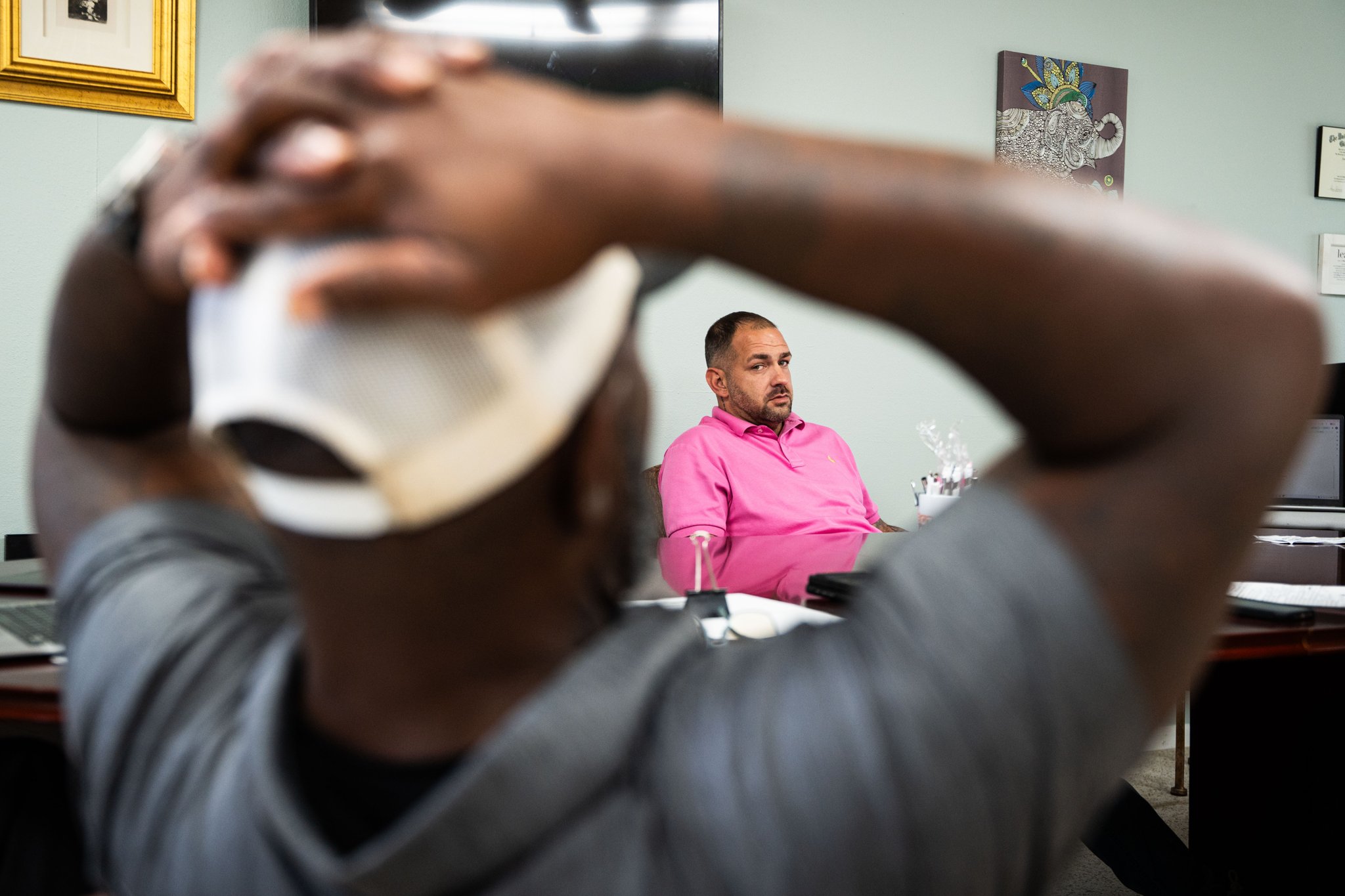
Campbell looks at Harris during a staff meeting in Project 180’s conference room in Sarasota. Photo: Jackson Ingvoldstad/News21
“We believe that’s what’s creating this culture we have here, right?” Campbell said. “It is that individualization, getting to know a person, truly trying to help them and holding their hand through the process.”
The smaller size can be limiting, though. As Project 180 prepares to open a women’s home, staff are open about their concerns and hesitations. As excited as they are to expand services, they want to be sure increasing quantity doesn’t decrease quality.
Melanie Alvarez is a grassroots engagement director at Americans for Prosperity, an advocacy organization that pursues conservative policy reforms and economic freedom. She works in Sarasota County and has seen Project 180’s impact.
“They create pathways for people to exit that system and become independent. That’s rare. Go look around the country and see how many programs are like 180,” Alvarez said. “Virtually none.”
Reentry is a challenging sector, and the nonprofits working in it require a special combination of factors to succeed. The organization relies on private donations, local grants and community relationships. Instead of owning an office building, it rents space in a Sarasota church for $250 a month. The roots Project 180 has established in Sarasota could mean the difference between survival or closure.
Local court officials know Project 180 as a place to send inmates who are struggling with substance use — the ones who are ready for and in need of a second chance.
Scrawled across Brian Richards’ court appearance record is the line “Enter and successfully complete the Project 180 Program.” That’s how he found himself calling Barbara Richards from county jail once a week for the last month of his sentence.
“We have the same last name, which is cool, but she is not family,” Brian Richards said. “But I consider her my family. I love Barbara. They welcomed me in. I spent two years learning about myself, learning about recovery and how to act, how to be a good citizen.”
He knew this next step was all about starting over, and once Project 180 eliminated the stress of finding somewhere to live, Richards said he could focus on recovering from addiction and finding steady employment.
Housing hurdles
Brian Richards would have encountered an unfriendly housing market in Florida.
The average one-bedroom apartment in Sarasota costs $1,743 per month, according to a market trends report from Apartments.com. COVID-19 drastically inflated rental prices in Florida’s major metropolitan areas.
Richards’ probation requirements would force him to live in Florida for the next 10 years — away from family who could have given him a place to stay.
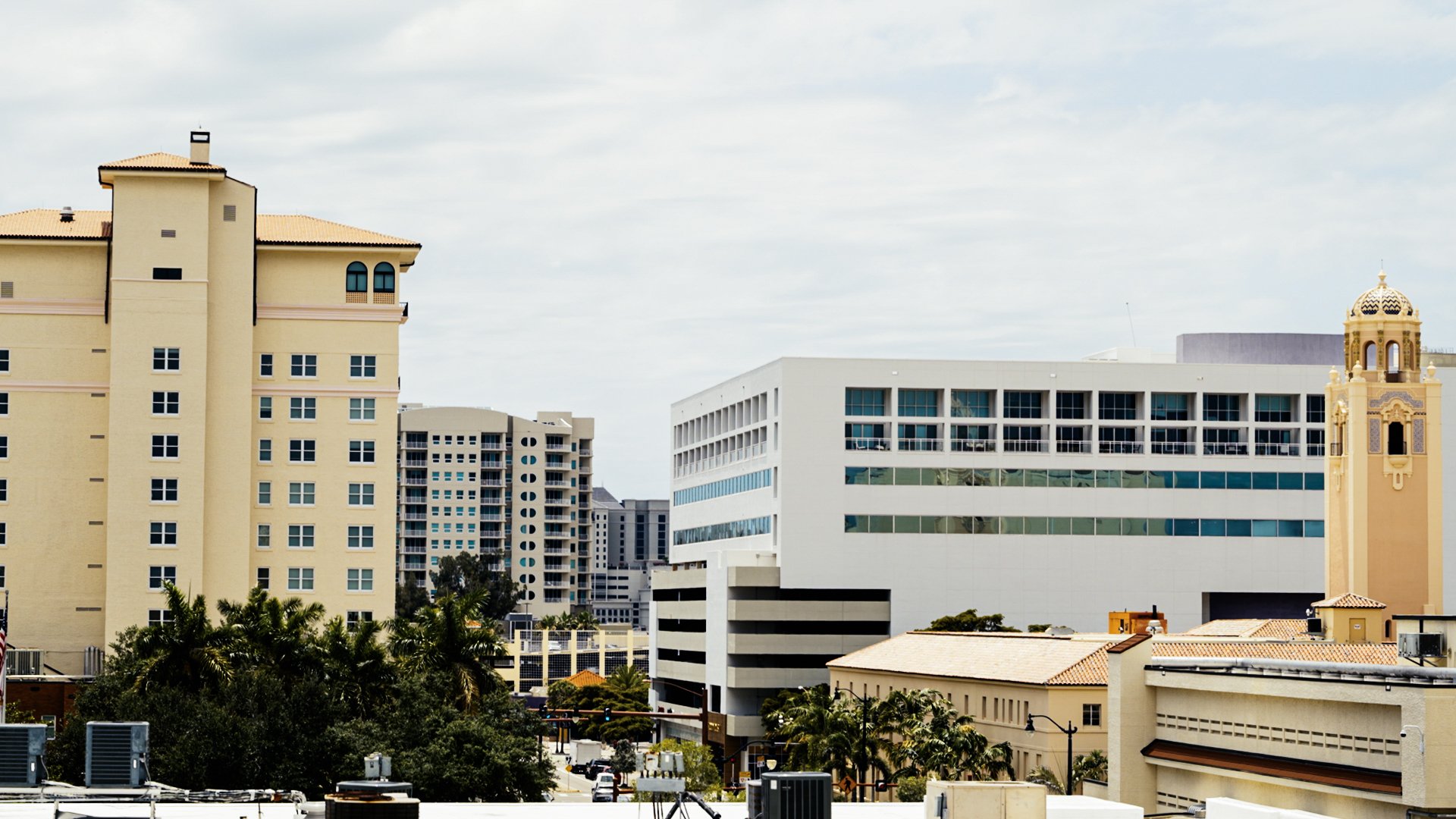
COVID-19 inflated rental prices in Florida’s metropolitan areas, and some Project 180 residents faced major challenges when trying to navigate the housing market with a criminal record. Photo: Jackson Ingvoldstad/News21
Formerly incarcerated people are nearly 10 times more likely to experience homelessness than the general public, according to the Prison Policy Initiative. In Florida, limited shelter capacity and restrictions on public camping further narrow their options.
A criminal history only complicates matters more.
According to a 2007 study of landlords in Akron, Ohio, 66% said they don’t rent to individuals with a criminal history. Additional barriers like severed family relationships can muddy the reentry journey.
Jesse Jannetta, a senior policy fellow at the Urban Institute, said that in his 21 years of experience, housing has always been the hardest reentry challenge to solve.
“Usually if something is hard to get, it will be hardest to get for people with criminal history,” Jannetta said.
Fortunately for the 153 residents who have been a part of Project 180, housing has been a key element of the organization since its founding.
“I came to realize that housing was co-equal with a need to be in recovery,” Barbara Richards said. “If you really want a sense of safety — and you may never have had one — the first place we look for it is within our own family, right? And within our own home. And some of the guys have never had that.”
Housing can become more than just a roof over your head. Sometimes, it provides access to a community. At Project 180, “it’s a brotherhood,” according to resident Johnny Doherty.
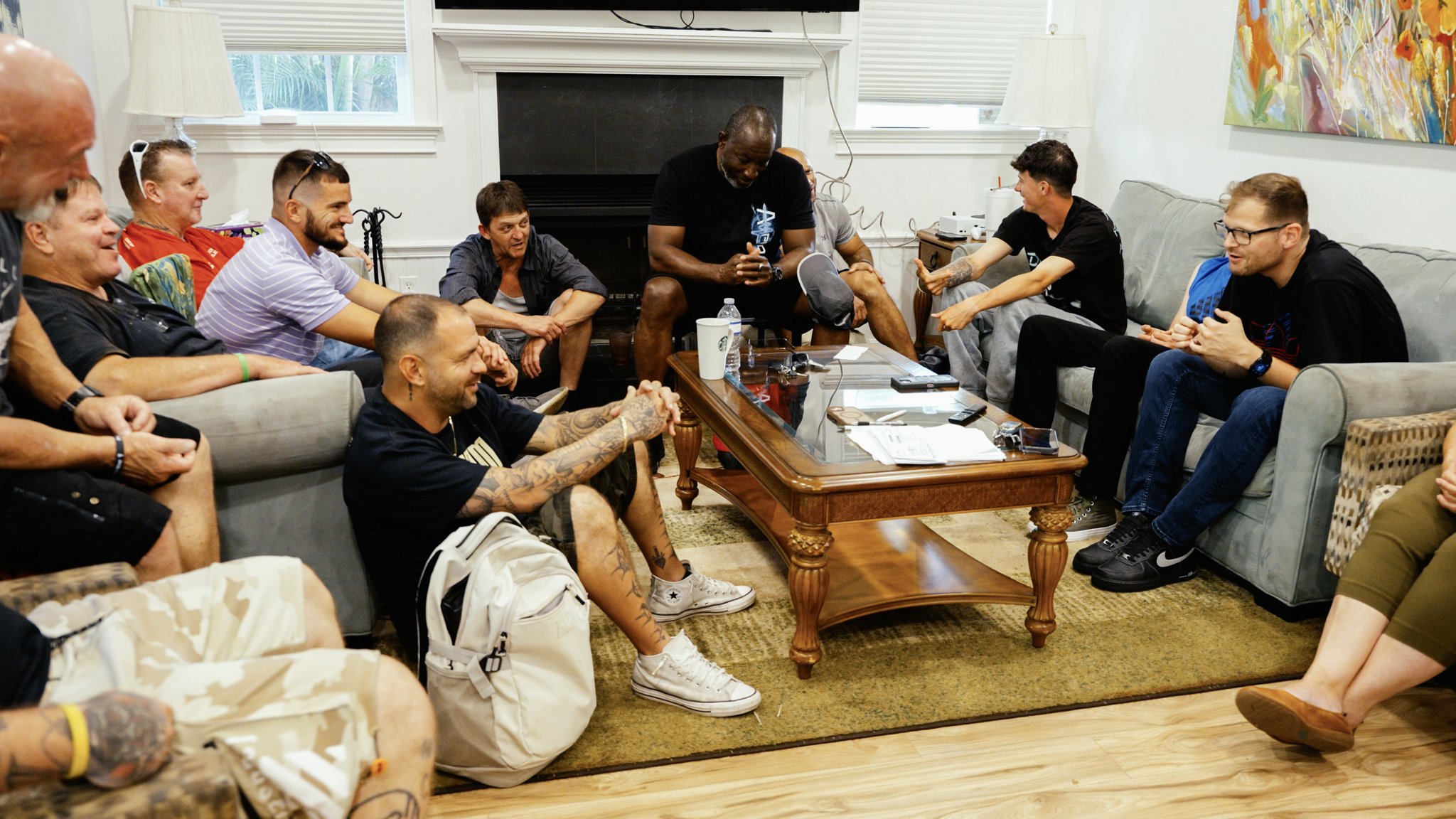
Campbell (center) leads a Project 180 Monday meeting in Johnny Doherty’s (right) transitional home. Attending this weekly meeting is one of the only requirements a resident must meet. Photo: Jackson Ingvoldstad/News21
“These guys take you in and they truly want to see you do good, which is foreign to somebody coming out of addiction, coming off the street, coming out of prison. It’s weird at first,” Doherty said. “An addict’s life is a very transactional life. … I didn’t need anything to be a part of here.”
Success isn’t a part of every story. Residents undergo a vetting process, and staff say the desire to truly recover must be present. Brian Richards wanted it. Doherty wanted it. But not everyone does.
The struggle became clear on a June day as Campbell leaned back in his desk chair and sighed. He worried about a new resident, who’d been checking into meetings, then leaving to sit outside the door. Other staff in the office nodded. They’d seen it, too.
Former staff member Thomas Graff knows the feeling of watching a resident relapse or return to incarceration. As a Project 180 graduate, he understands the reintegration struggle on a personal level.
He called the search for housing in Sarasota “the biggest hurdle” he faced post-incarceration and said he paid thousands of dollars in rental application fees just to be turned down repeatedly. He eventually found someone desperate to get rid of their lease — a studio apartment he shared with his son and dog for a time. Eventually, he secured a three-bedroom rental and now owns his own business installing outdoor screens.
For Graff, resident relapses and recidivism cut deeply.
“It breaks your heart,” Graff said. “You don’t want that to happen, and you do everything on a daily basis to try to prevent it, but at the end you have to realize you can’t stop anybody that wants to do something like that. You can help them only as much as they want the help.”
The roof of recovery
It’s 5:30 a.m., and Brian Richards gets out of bed, heading to his job at a beach resort. One of his first tasks is scouting the sandy waterfront that’s part of the property. It’s an area for nesting sea turtles, and it’s his job to protect it.

Sarasota Beach stretches along Florida’s Gulf Coast in Sarasota, home to Project 180. Photo: Jackson Ingvoldstad/News21
Holes kids have dug for sandcastles, footprints of couples plodding along the beach at night — these are all treacherous for sea turtles, which dislike obstacles. Richards smoothes out the sand, keeping it clean and safe.
He’s worked there nearly two years, putting his heart and soul into the job, even when back-to-back hurricanes devastated the resort. The family who owns it knows him as he is today, not as his old self, and he’s excited to tell them about his life’s journey one day.
“They know the new me, and they love me, and … they’ll be super surprised, and I can’t wait to see the look on their face,” Richards said.
The small details of recovery are evident, from the humble grin that stretches across his face as he shares his credit score to the way he describes himself as responsible. He’s a graduate now, living with a few other graduates in Sarasota. He lives what he calls “a wonderful life,” unrecognizable from his history of addiction and crime.
While his formal education ended young, he is constantly learning. Standing in front of the long, yellow brick building that changed his life, Richards recounts the wisdom he’s soaked up over the years. Project 180 taught him how to be sober and to not take things that don’t belong to him. Perhaps most importantly, he said, it taught him about himself.
The organization gave him another chance when he needed it the most, and the roof under which to take it. For Brian Richards, Project 180 is his university.
 Our goal is to reduce the impact of repeat offenders upon public safety, public spending, Florida families and individual lives.